







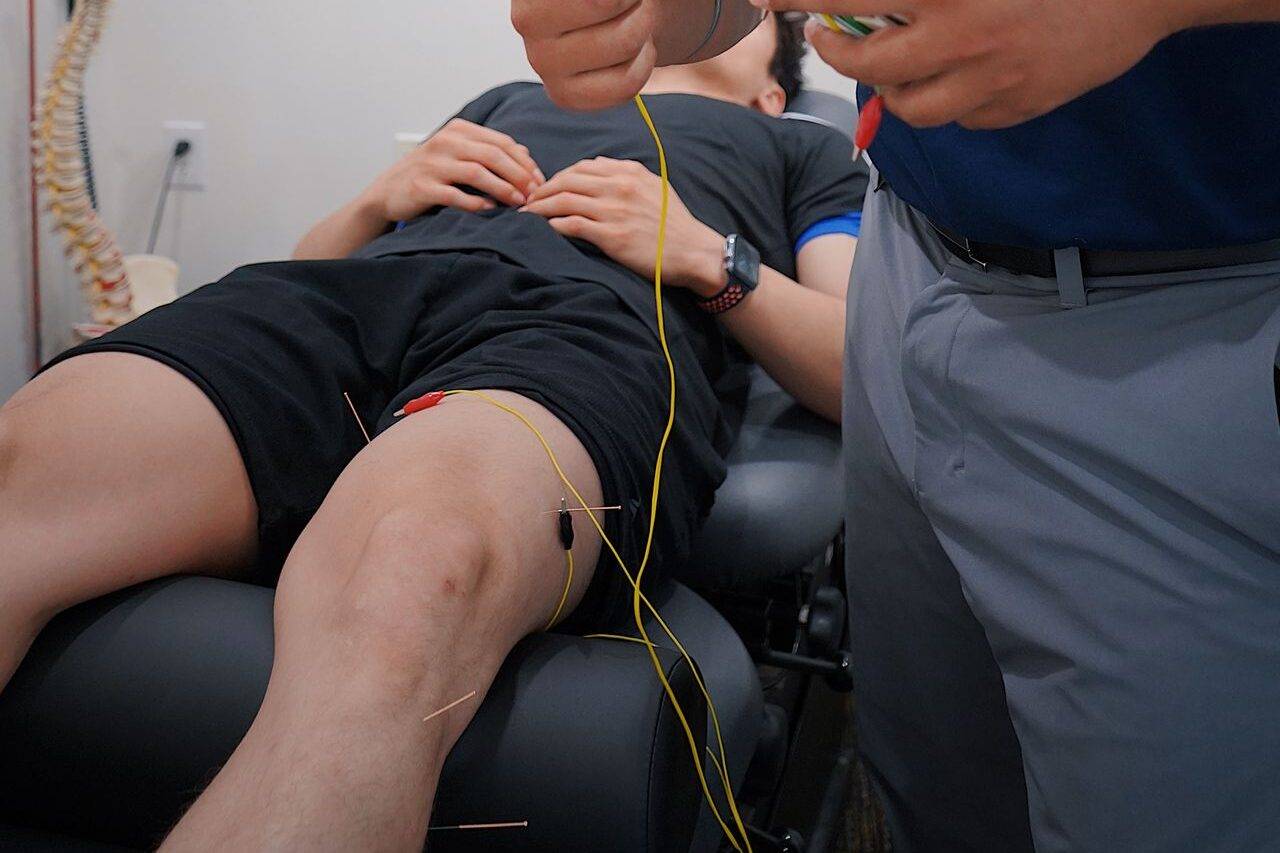

Electroacupuncture combines the time-honored principles of traditional acupuncture with gentle electrical stimulation, offering another way to enhance treatment for a variety of health concerns.
If you’ve ever wondered what is electroacupuncture and how it differs from traditional acupuncture, here’s what you need to know.
What Is Electroacupuncture?
Electroacupuncture is a form of acupuncture in which a mild electrical current is applied to specific acupuncture points on the body.
This technique is rooted in traditional Chinese medicine (TCM), which views the body as a network of interconnected pathways through which vital energy, known as Qi, flows. According to TCM, imbalances or blockages in the flow of Qi may contribute to pain or other health concerns.
During electroacupuncture, thin, sterile needles are inserted into acupuncture points just as they are during traditional acupuncture. Selected needles are then connected to a small device that delivers gentle electrical impulses.
The added stimulation allows acupuncture points to be activated continuously during treatment and may enhance the effects of traditional needling.
What Does Electroacupuncture Feel Like?
The sensation experienced during electroacupuncture can vary from person to person.
Most patients describe a mild:
- Tingling
- Pulsating
- Tapping
- Warming sensation
The intensity can be adjusted by the acupuncturist based on your comfort level and treatment goals.
The electrical current is typically kept at a low, comfortable level and should not feel painful.
How Does Electroacupuncture Work?
Researchers continue to study exactly how electroacupuncture affects the body, but several mechanisms may help explain its effects.
1. Endorphin Release
Stimulating acupuncture points may encourage the release of endorphins and other chemicals involved in the body’s natural pain-regulation systems.
This is one reason electroacupuncture is commonly used for pain and physical discomfort.
2. Circulation and Tissue Support
Electrical stimulation may influence local circulation around the treated area, which can be helpful when addressing muscle tension, soreness and recovery.
3. Nervous System Regulation
Electroacupuncture can influence nerve signaling and is often used when treatment is focused on pain, muscle activation or certain neurological concerns.
4. Neurochemical Activity
Research has also explored how acupuncture and electroacupuncture may influence neurotransmitters and other signaling pathways involved in pain, mood and sleep.
Common Uses of Electroacupuncture
Electroacupuncture is a versatile technique that may be incorporated into treatment for a variety of concerns, including:
- Musculoskeletal pain and tension
- Back and neck pain
- Joint discomfort
- Muscle weakness or tightness
- Certain neurological concerns
- Digestive symptoms
- Menstrual and reproductive concerns
- Stress and emotional health
- Recovery from physical activity
Whether electroacupuncture is appropriate depends on the individual and the goals of treatment.
Electroacupuncture vs. Traditional Acupuncture
Traditional acupuncture relies on the placement and manual stimulation of needles.
Electroacupuncture uses the same basic principles but adds a gentle electrical current between selected needles.
This allows for consistent stimulation throughout the session and can be especially useful when treating larger muscle groups, persistent pain or areas where additional stimulation may be beneficial.
Not every treatment requires electroacupuncture. Your acupuncturist can determine when it makes sense to incorporate it based on your symptoms and response to care.
Precautions and Contraindications
Electroacupuncture is generally safe when used appropriately, but it may not be suitable for everyone.
Extra caution may be needed for people with:
- Pacemakers or certain implanted electrical devices
- Epilepsy or seizure disorders
- Certain heart conditions
- Pregnancy, depending on the points and areas being treated
Be sure to let your acupuncturist know about your medical history, medications, pregnancy and any implanted devices before treatment.
Takeaway
Electroacupuncture brings together traditional acupuncture and controlled electrical stimulation in a treatment that can be tailored to the individual.
It may be especially useful for pain, muscle tension, recovery and certain neurological concerns, while still following the same individualized approach used in traditional Chinese medicine.
If you’re interested in learning whether electroacupuncture may be appropriate for you, contact us today to learn more or schedule an acupuncture appointment.