







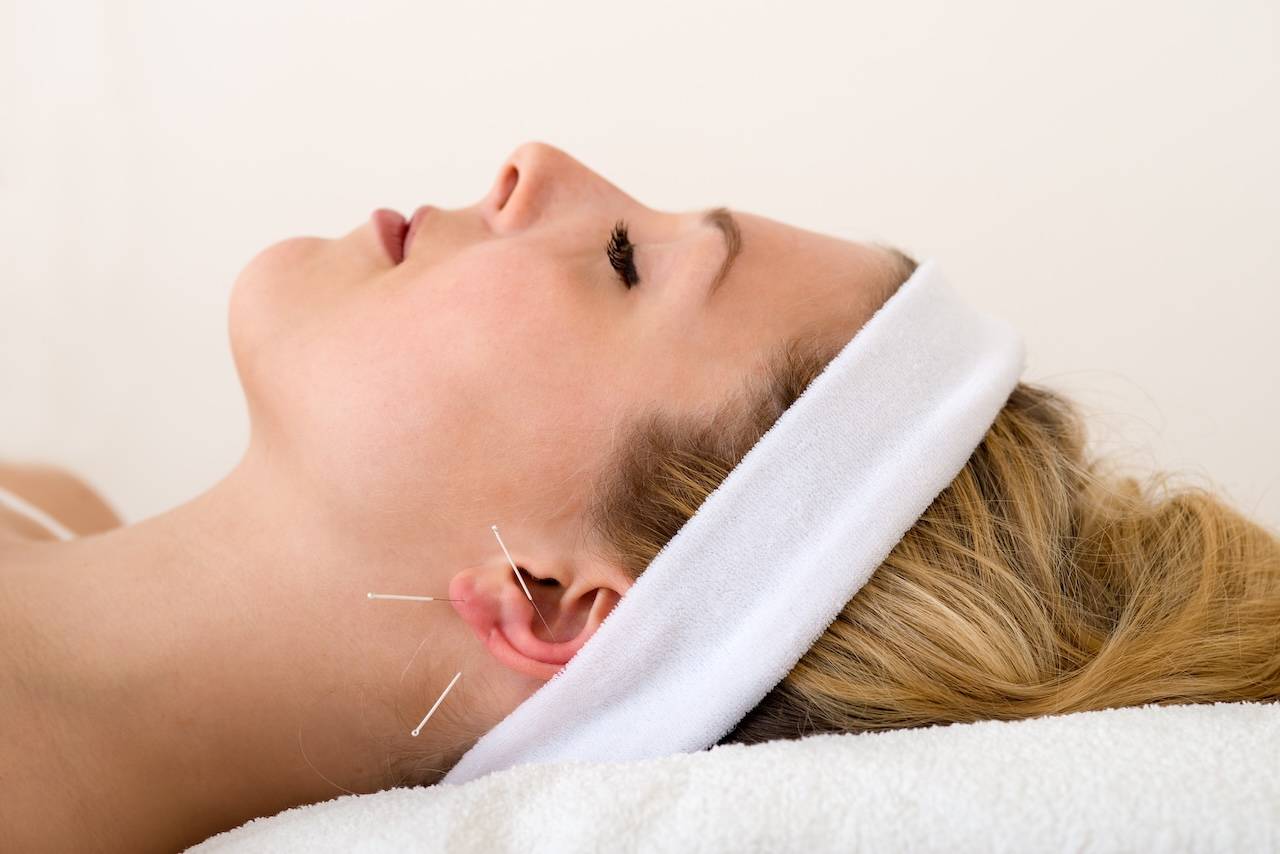

Ear acupuncture, also known as auricular acupuncture, involves stimulating specific points on the outer ear with very fine needles.
The practice has roots in traditional Chinese medicine, while the modern system was further developed in the 1950s by French physician Paul Nogier, who mapped areas of the ear to different regions of the body.
Today, ear acupuncture benefits are explored for concerns ranging from pain and stress to sleep, digestion and recovery.
What Is Ear Acupuncture?
In traditional Chinese medicine, the ear is viewed as a microsystem that reflects different areas and functions of the body.
A practitioner selects specific points based on a person’s symptoms and health goals. These points may be used on their own or alongside body acupuncture.
Ear seeds or acupressure may also be used to stimulate similar areas without needles.
Because auricular techniques are easy to incorporate into a regular session, they can complement other approaches such as cupping, herbal medicine or bodywork.
The History of Auricular Acupuncture
The use of the ear in traditional healing dates back centuries, but modern auricular acupuncture became more systematized in the 1950s.
Paul Nogier developed an ear map based on the idea that the outer ear resembles an inverted fetus, with different regions corresponding to different areas of the body.
His work helped shape many of the auricular systems used by practitioners today.
Potential Ear Acupuncture Benefits
1. Pain Relief
Auricular points are commonly used for pain-related concerns such as:
- Neck and shoulder tension
- Back pain
- Joint discomfort
- Headaches
- Muscle pain
These points may be selected based on the location and type of discomfort and can be combined with body acupuncture when appropriate.
2. Stress and Emotional Health
Many people find ear acupuncture calming and relaxing.
It may be used for:
- Stress
- Anxiety
- Emotional tension
- Feeling overwhelmed
For some people, the quiet nature of the session itself can also create space to slow down and reset.
3. Addiction and Recovery
Auricular acupuncture has been incorporated into some addiction-treatment and recovery programs.
Certain protocols are used to help with cravings, withdrawal-related discomfort and relaxation as part of a broader recovery plan.
4. Sleep
Ear points are also commonly used for sleep concerns.
They may be selected for people who have difficulty:
- Falling asleep
- Staying asleep
- Settling down at night
- Feeling rested in the morning
The goal is often to help the body relax more fully and make it easier to transition into rest.
5. Digestive Concerns
Auricular acupuncture may also be used for digestive symptoms such as:
- Nausea
- Bloating
- Indigestion
- Stress-related digestive discomfort
As with other forms of acupuncture, point selection depends on the individual rather than using the same combination for everyone.
What Does Ear Acupuncture Feel Like?
The needles used are very fine, so most people feel only a brief pinch or pressure during insertion.
Once they are in place, sensations may include:
- Warmth
- Tingling
- Heaviness
- A dull ache
- Deep relaxation
Some people barely notice the needles at all.
How Ear Acupuncture Is Used at Tara Acupuncture & Wellness
At Tara Acupuncture & Wellness, auricular points may be incorporated into a regular acupuncture session when they fit the person’s symptoms and goals.
They can be especially useful when addressing concerns such as pain, stress, sleep or recovery and may be combined with other techniques as part of individualized care.
Final Thoughts
Ear acupuncture is a versatile technique that can be incorporated into a broader acupuncture session in many different ways.
Whether the goal is easing physical tension, calming the mind, improving sleep or addressing other concerns, auricular points offer another option for tailoring care to the individual.
Book your acupuncture appointment today to get started.